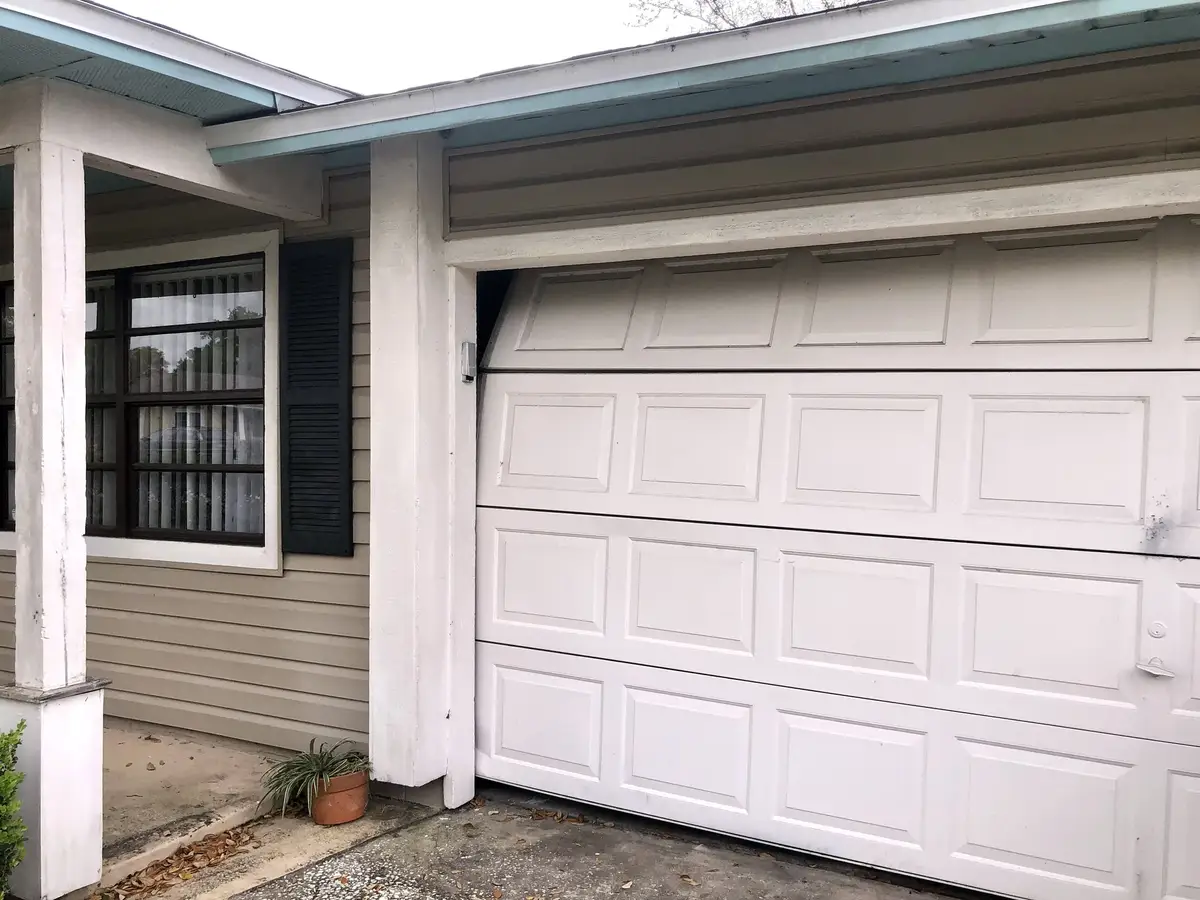
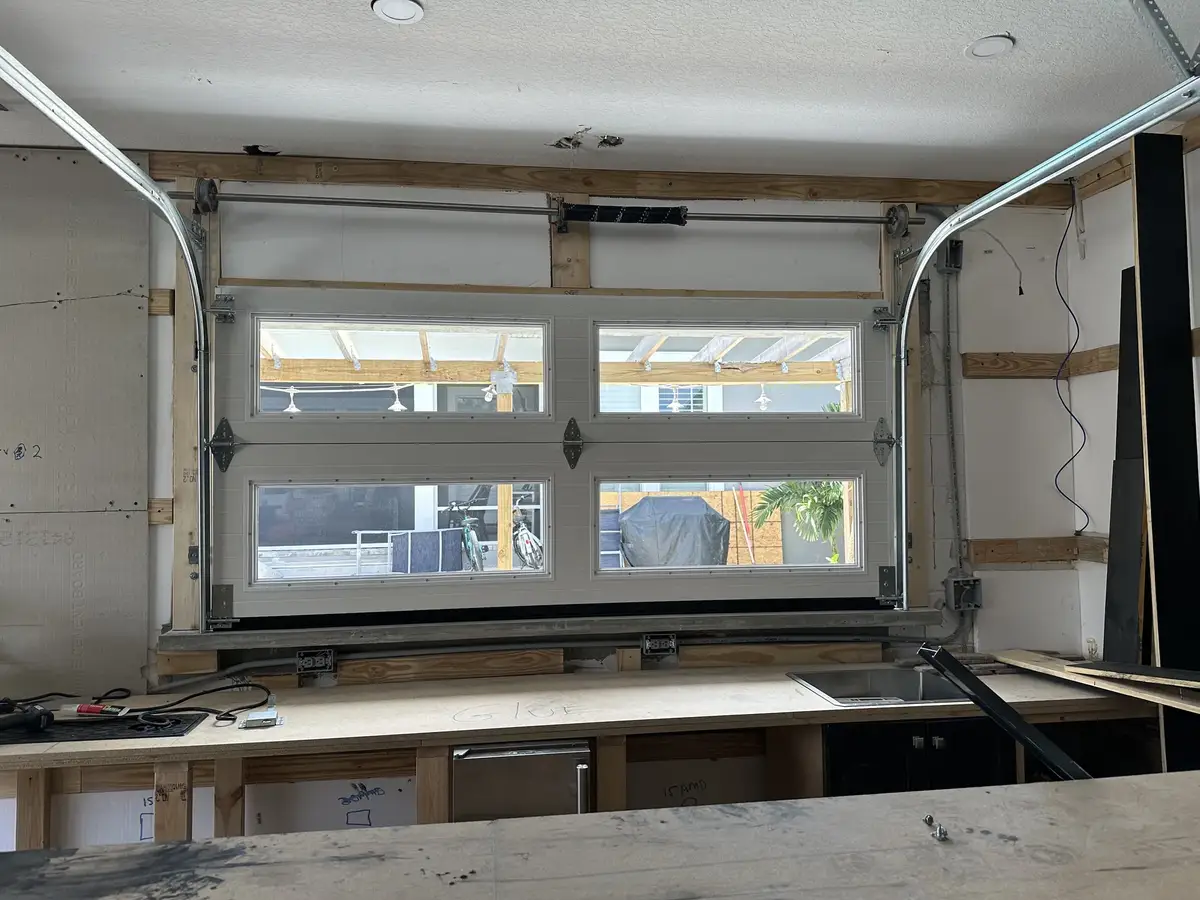
Experts Garage Door installs doors from all major manufacturers and offers a free on-site estimate. For a project assessment, see our new garage door installation service. The explanation below draws on manufacturer instructions and industry guidance. The actual specification and written scope for your job should identify the equipment and work included.
New Garage Door InstallationFirst, establish what the project includes
Clopay describes its dealer installation process as progressing through selection, measurement and preparation, removal, fitting, and final inspection and testing. Those stages provide a useful outline, but they are not a universal checklist of services included in every quotation. Before work starts, ask for the door model, opening size and agreed work to be recorded together.
Useful questions include: Is this a door replacement only, or does the project include an opener? Who handles removal of the old equipment? Are changes to the opening included? What happens if a problem with the supporting structure is discovered? Ask which documents you will receive when the work is complete. These are questions to settle with the installer, not assumptions about what a particular price covers.
Door appearance and construction are separate choices from the installation method. Our types of garage doors guide explains those options. Once a model is selected, its own instructions govern how its components are fitted.
Types of Garage DoorsMeasure the opening and the space around it
Clopay's measuring guidance looks beyond opening width and height. The installer also needs to establish the space beside the opening, above it and back into the garage. An opening that looks suitable from the driveway does not tell the whole story about the room available for the operating hardware.
In Clopay's track guidance, headroom is the space above the opening, sideroom is the clearance beside it, and backroom extends into the garage. Track arrangements differ: a standard installation and a low-headroom installation do not use an interchangeable layout. The available space and selected equipment therefore need to be considered together rather than relying on a single generic clearance figure.
Ask the installer to explain the proposed track arrangement for your garage and identify anything that needs to move before work begins. If an opener is included, ask how it fits the available space. A clear explanation at this stage is more useful than assuming that hardware suited to a different garage will fit yours.
Clopay Installation and Preparation GuidancePrepare the work area and remove the existing door
Clopay advises clearing vehicles and bulky stored items away from the opening, track and opener work areas. Before the appointment, agree where equipment can be placed and how access will be managed. Keep a separate route for household members and keep children and pets away from the work area.
Removal is a professional task, particularly where spring-loaded parts are involved. DASMA recommends trained door-system technicians for installation and stresses that the instructions for the actual model matter. A video showing another door being removed is not a sufficient basis for dismantling your own system.
Ask whether the old door and associated materials will be taken away, and whether anything is intended to remain. Record the answer in the scope rather than relying on the word replacement to imply disposal, structural repairs or a new opener. Do not start loosening the existing hardware to prepare for the crew.
Fit the sections, tracks and lifting system
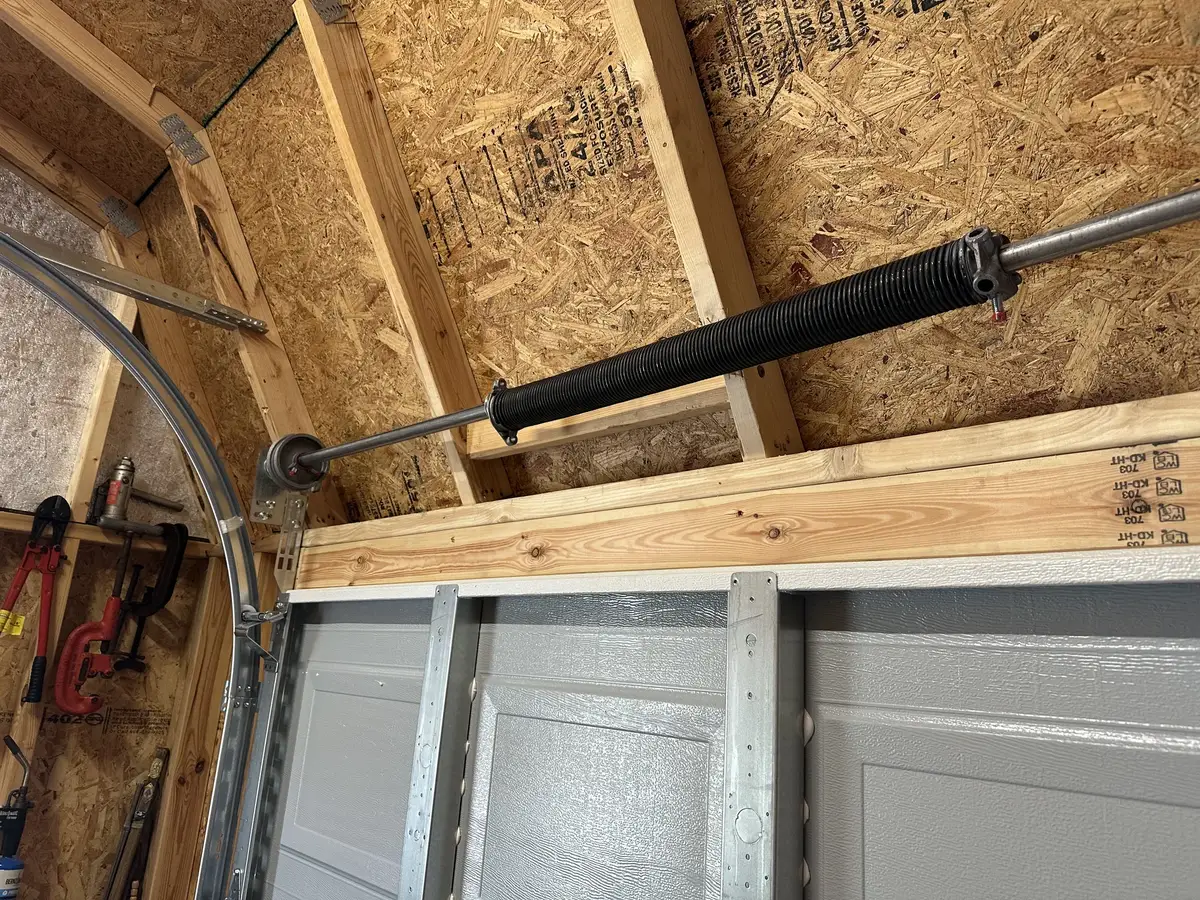
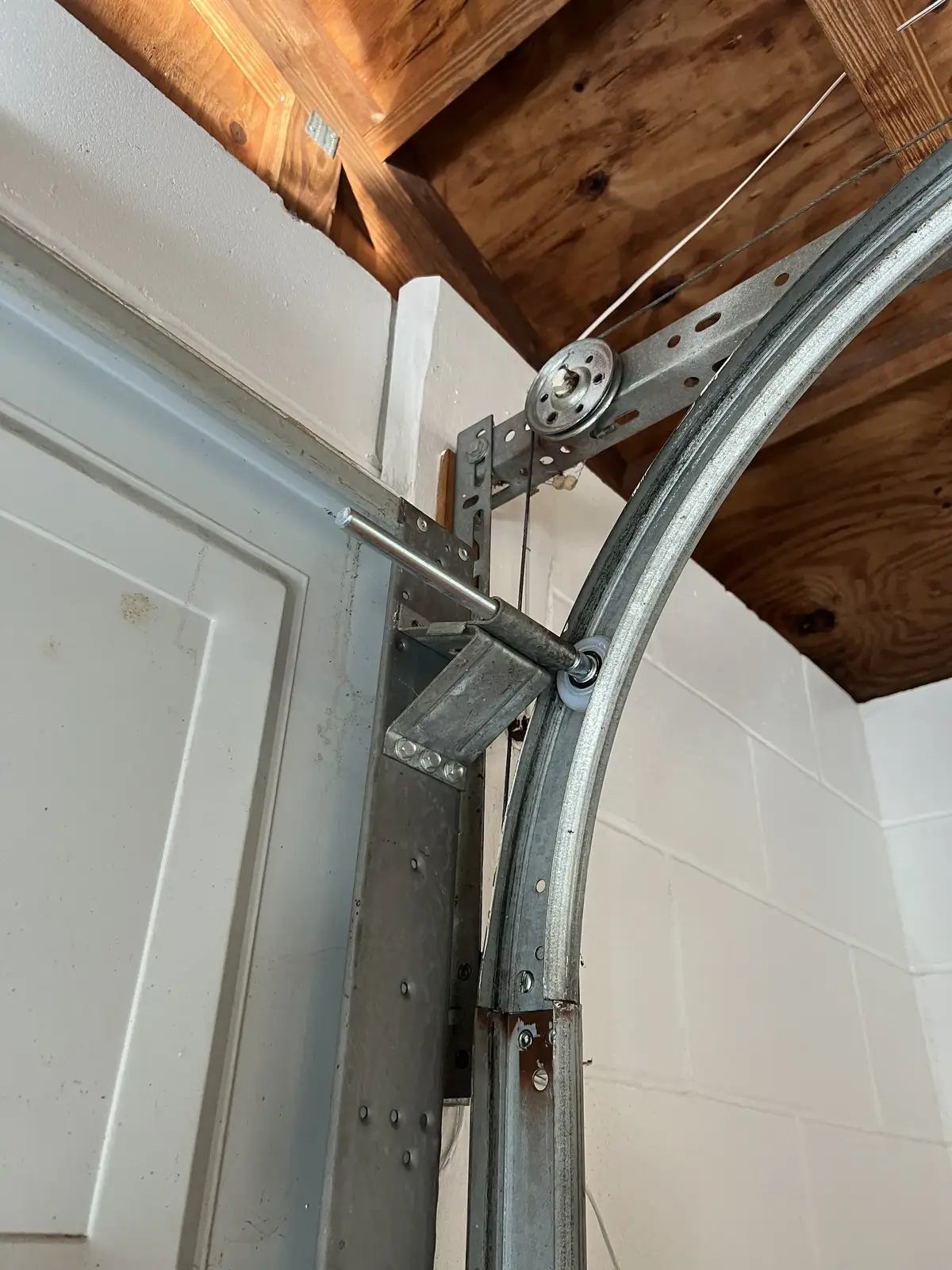
Clopay's residential installation manual separates section assembly, track installation and the spring system into distinct stages. The sections form the moving door; hinges allow them to articulate, while rollers travel within the tracks. The specified brackets and supporting fixings are part of the installation, not just finishing details.
The lifting system must be suited to the door. Springs and associated components carry stored energy, so this guide does not provide winding turns, tension adjustments or dismantling instructions. Those details belong to the applicable manufacturer's instructions and a trained installer's work. A motor should not be treated as a substitute for a correctly installed door system.
At this stage, a useful homeowner question is whether the assembly matches the chosen model's documentation. Ask the installer to identify the model and explain any departure from the originally agreed equipment. Avoid requesting a shortcut based solely on how similar an old part looks to a new one.
Address the opener and verify safety operation
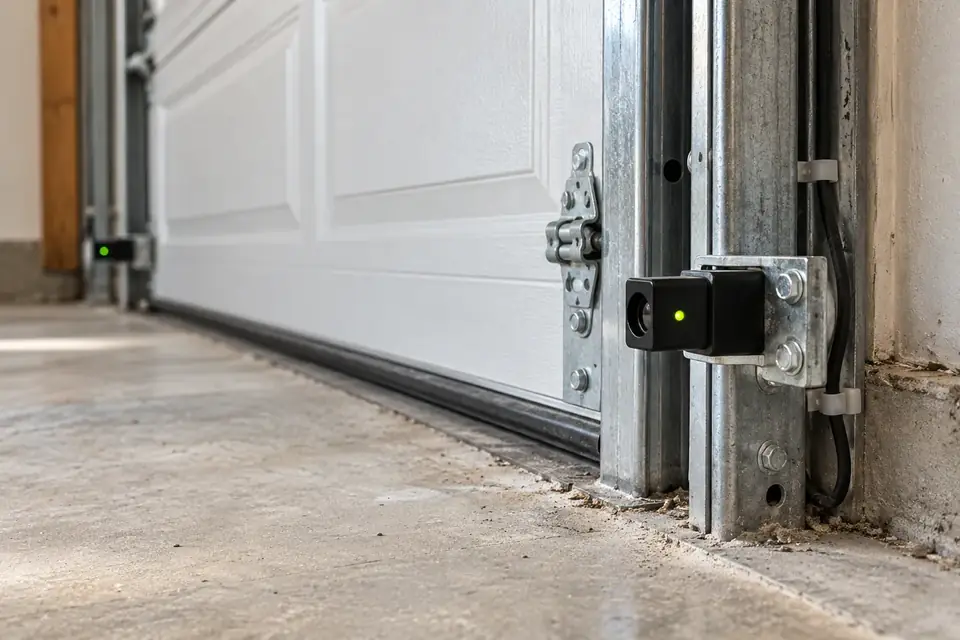
An automatic opener adds its own setup and safety checks. Genie distinguishes between its photoelectric beam system and contact-reversal system. The first detects an interruption across the opening; the second concerns reversal when the closing door meets an obstruction. One successful check does not demonstrate that both functions have been verified.
Genie's published testing guidance is equipment-specific. At handover, ask the installer to demonstrate the checks required by the installed opener's manual and explain the controls. Have the model information and instructions available rather than applying settings or button sequences from a different opener.
Also ask for a demonstration of normal opening and closing and an explanation of what to do if the door stops working. If something appears wrong during the demonstration, raise it before accepting the handover. Do not solve a failed safety check by disabling a sensor or requesting extra closing force.
Genie Reversal-system GuidanceConfirm wind-related requirements and paperwork
Where a wind-rated door is specified, the complete assembly matters. Clopay's single-car WindCode installation supplement explains that the prescribed reinforcement, track, brackets and fasteners are necessary for the door to perform as designed. A rating is not a reason to improvise the supporting installation.
Ask which product documentation and local approvals apply to the property, who is responsible for the paperwork, and whether an inspection is part of the agreed work. This guide does not assign a universal wind rating or permit requirement to every address. Experts Garage Door's confirmed offering includes hurricane-rated doors and permit handling for that work; the requirements for your project still need to be established.
Clopay Single-car WindCode SupplementFinish with a clear handover
Before the installer leaves, ask for the door and opener model details, manuals, warranty information and any outstanding paperwork. Make sure you know whom to contact about the installation and where to find the instructions. Keep the job's written scope with those documents so you can distinguish what was supplied from optional work discussed earlier.
DASMA recommends keeping both door and opener manuals accessible and following the model-specific safety guidance. Ask the installer which routine observations are appropriate for you and which work requires a technician. Installation is the start of ownership, so a useful handover should leave you able to operate the system and recognise when to seek help.
To discuss a new door or a problem with an existing one, call Experts Garage Door at (352) 410-0566. Emergency service is available, and same-day service is available for most jobs, subject to availability on the day.
Garage Door Installation Blog